- Blog
- Exploring The History Behind Southports Oldest Buildings
Exploring the History Behind Southport's Oldest Buildings
A Southport heritage and history blog by David Walshe
For his latest heritage and history blog, local historian David Walshe looks at four of the oldest buildings that are still standing in Southport town centre.
There are not many buildings left which date from that early period when our town was a mere bathing village. So, without further ado, let’s take a closer look at some that are still with us!
RECOMMENDED:
👻 Spooky Tales From Southport's Past
🌊 Southport's Many Appellations
🎉 What's on in Southport
Horse & Jockey Stables & Fairfield Cottage – 1817

Adjoining the Cheshire Lines pub on King Street is No.83, known to be named in the 1860s at least as Fairfield Cottage. When it was first built, this cottage had livery stables adjoined to it, known to be named as the Horse & Jockey Stables, and which are also still standing today, accessed via a courtyard just a few doors down towards Duke Street.
A guidebook from the mid-C19th tells us that in 1817, a man called George Hurst opened these livery stables, said to be the first in Southport, in one of the ‘oldest streets in the town’, then called Upper King Street. Leighs map of 1824 shows the livery stables and on Walkers plan of 1834, the enclosed land encompasses the livery stables, what today is No.83 and a building on the site of The Cheshire Lines pub.

In around 1910, the Cheshire Lines pub frontage at least appears to have been rebuilt, the old bay windows removed, along with a new roof style added. A single brick within the rear of No.83 King Street bears the date 1915.
I will suggest that this was the year that the old livery stables were severed from the cottage fronting the street, and at the same time, the roofline of No.83 was raised to the height it is today, allowing for extra headspace.
The Bold Hotel – 1830/32

The Bold Hotel is the oldest building on the seaward side of Lord Street, closely followed by its near neighbour across the Seabank Road junction, Sinclair’s Bar, which is also shown on Walkers 1834 plan.
The Bold is the oldest hotel that is still standing, followed by The Hoghton Arms (1838), the latter albeit, now solely in use as pub & eatery. In Peter Whittle’s 1831 guidebook entitled, Marina, the Bold is shown & named on a map surveyed in 1830 as, ‘New Hotel’. It is described in said guide as thus-
A new hotel is now erecting by Mr. Mawdsley, the builder, at the entrance to the village, considerably higher up than the Hesketh Arms Inn (Scarisbrick Hotel). It is now covered in, and is calculated, as to its accommodations, for the higher classes of society; perhaps it will be completed by the summer of 1831.

In another guidebook, published in 1832, author William Alsop, gave the following update-
The Bold Arms, recently opened, is occupied by Mr. Halfey. The outward appearance of this Hotel is truly commanding, and the internal arrangement is replete with every convenience, with the opportunity of making up from fifty to sixty beds. There is also stabling for upwards of twenty horses; and it is in contemplation to form an extensive Bowling Green in the rear.
As Southport continued to rapidly develop in neighbouring streets such as Seabank Road, the proposed bowling green did not come to fruition. Despite this early set back, the Bold has continued to operate successfully on Lord Street for 194 years.
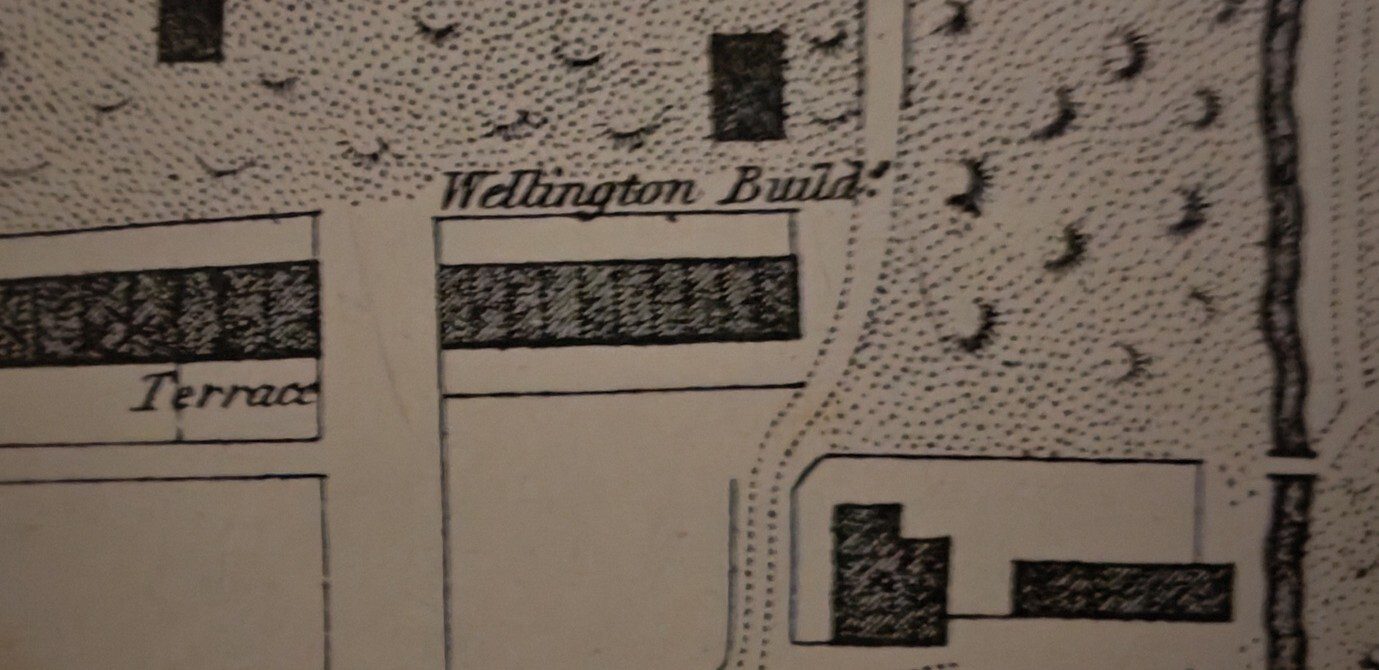
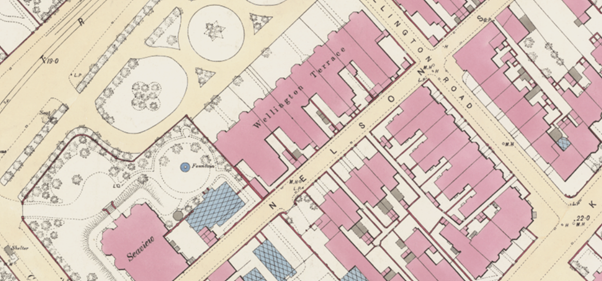
Wellington Terrace/Buildings – 1818

Also known as Wellington Place or Parade, they are the oldest properties still standing on Lord Street. They were built during the autumn of 1818, in readiness for the 1819 holiday season, described as being ‘fitted up in a superior style’, and commanding a, ‘beautiful prospect of the sea’, which would have been within a few hundred yards at that time.
Mrs Clare (then of the Eagle & Child Hotel, aka Dukes Folly) would happily show prospective visitors around the properties, for those who preferred a private family retreat by the sea. Originally, there were ten properties within this regency terrace however, two were later demolished to make way for the gardens and a large conservatory added to the Victorian property on the corner of Duke Street, once the former home of jam manufacturer, Sir William Pickles Hartley. Thankfully, Wellington Terrace still stands today, offering us a hint of what South-Port looked like back in the bathing village days.
Punch Tarmey’s/Green Hill Cottages – 1824 or earlier

Ok, so I may be bending my own parameters slightly here, however, what is now (as you look at it) the left hand side part of Punch Tarmey’s, is shown on Leigh’s 1824 map as part of a pair of semi-detached dwellings and are by far the most northernly buildings within early Southport at that time.
By at least 1834, two more adjoining properties had been added to either side of the semi’s, most interestingly, one being clearly denoted as a Roman Catholic Chapel, therefore predating St. Maries. They are named in 1834 as Green Hill Cottages.
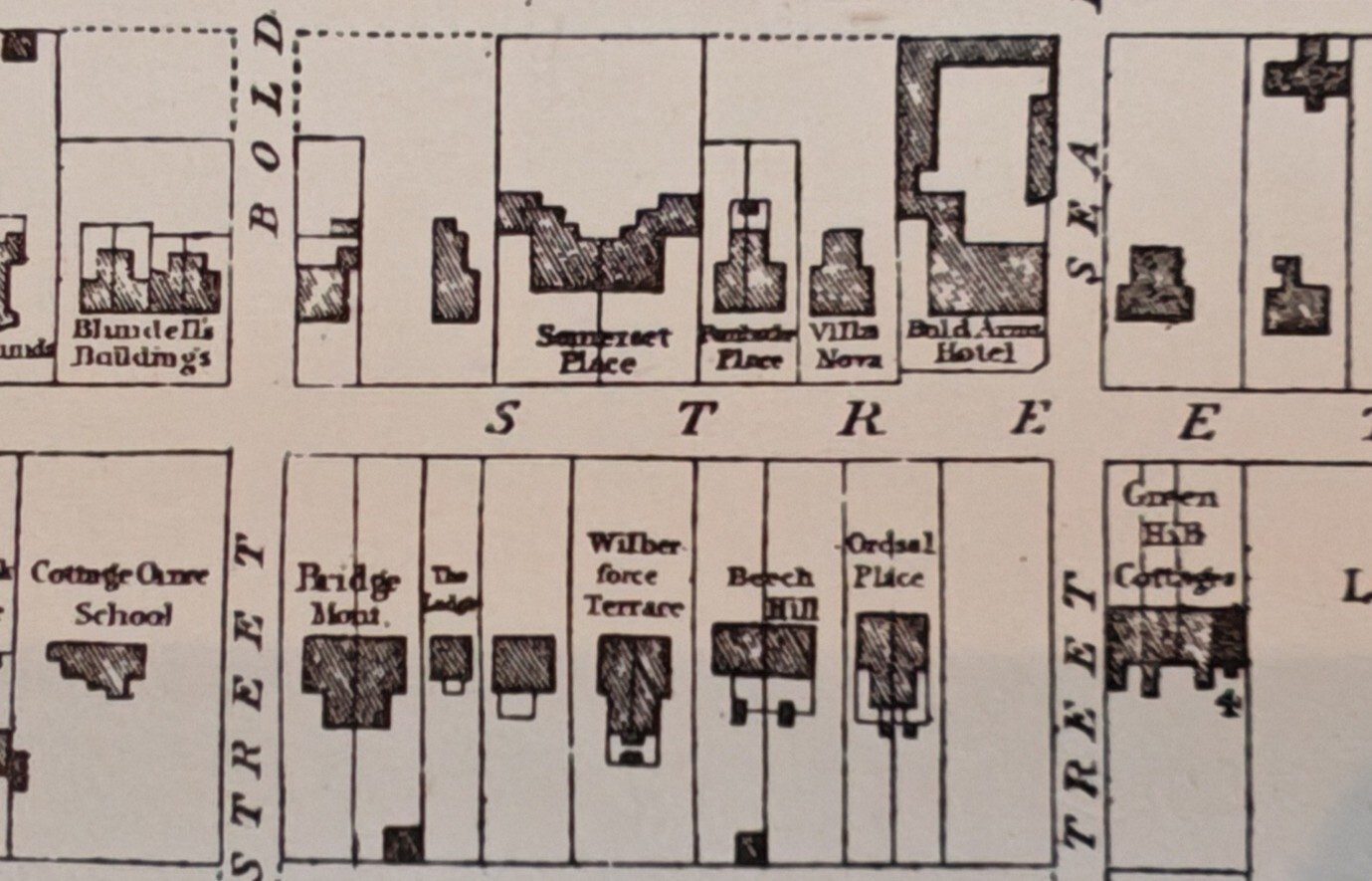
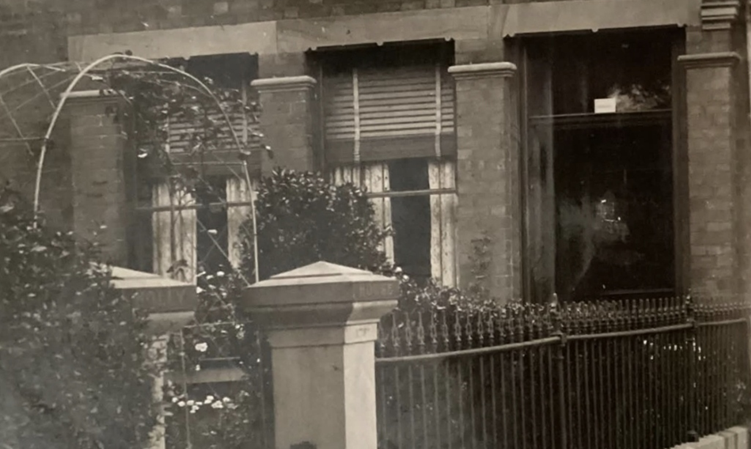
This row of buildings has had many uses, the one in particular that I am referring to being used as a lodging house or apartments. By at least the late 1880s, bay-boxes appear to have been added to the two buildings still standing which form Punch Tarmey’s today.
The left hand side was known as Holly House by at least the 1890s. The corner plot was a post office. During the mid-C20th, the corner plot was a well-known Butchers as pictured.

David Walshe is a historian and author who specialises in the local history of Southport and the surrounding areas. He regularly hosts local history talks and guided walks and has published two books to date.
- Website - Secret Sand Land
- Facebook - Secret Sand Land
History and Heritage


You May Also Like
Stay up to date
Sign up below for the latest news on Southport town centre businesses, events and offers.

Have some great content to share?
Do you represent a business in Southport town centre? Let us know if you have any upcoming events, offers, or would like to be featured in any of our blogs.